
Legacy Approach
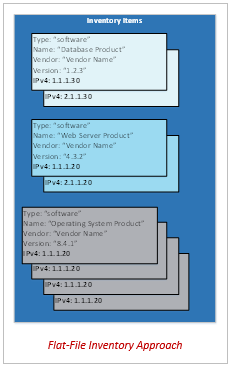
Flat-File Representation
<!-system-security-plan:
  uuid: 11111111-2222-4000-8000-000000000000
  system-implementation:
    inventory-items:
    - cutuuid: -->11111111-2222-4000-8000-011000000001
      <system-implementation>description: <!-- interconnection -->
    <system-inventory>
        <inventory-item uuid="uuid-value">
            <description><p>Flat-FileLegacy Example (No implemented-component).</p></description>
      <propprops:
      name="- name: asset-id"id
        value="value: unique-asset-id"/>ID-01
      <prop- name="name: ipv4-address"address
        value="0.0.0.0"/>value: <prop10.1.1.1
      name="- name: ipv6-address"address
        value="0000:0000:0000:0000"/>value: <prop2001:db8:3333:4444:5555:6666:7777:8888
      name="virtual"- value="no"/>name: <propvirtual
        name="public"value: value="no"/>'no'
      <prop- name="fqdn"name: value="example.com"/>public
        <propvalue: name="uri"'no'
      value="https://example/query?key=value#anchor"/>- <propname: name="fqdn
        value: dns.name
      - name: uri
        value: uniform.resource.identifier
      - name: netbios-name"name
        value="value: netbios-name"/>name
      <prop- name="name: mac-address"address
        value="value: 00:00:00:00:00:00"/>00
      <prop- name="software-name"name: value="software-name"/>asset-type
        <propvalue: name="version"operating-system
      value="V- 0.0.0"/>name: <propserial-number
        name="asset-type"value: value="os"/>
            <prop name="vendor-name" value="Vendor Name"/>
            <prop name="model" value="Model Number"/>
            <prop name="patch-level" value="Patch-Level"/>
            <prop name="serial-number" value="'Serial #"/>#'
      <prop- name="name: asset-tag"tag
        value="value: Asset Tag"/>Tag
      <prop- name="name: vlan-id"id
        value="value: VLAN Identifier"/>Identifier
      <prop- name="name: network-id"id
        value="value: Network Identifier"/>Identifier
      <prop- name="name: scan-type"type
        ns="ns: http://fedramp.gov/ns/oscal"oscal
        value="infrastructure"value: infrastructure
      - name: vendor-name
        ns: http:/>/fedramp.gov/ns/oscal
        <propvalue: name="Big Vendor, Inc.
      - name: scan-type
        ns: http://fedramp.gov/ns/oscal
        value: database
      - name: allows-authenticated-scan"scan
        value="no">value: <remarks><p>'no'
        remarks: If no, explain why. If yes, omit remarks field.</p></remarks>
      </prop>- <propname: name="baseline-configuration-name"physical-location
        value="Baselinevalue: Config. Name" />
            <prop name="physical-location" value="Physical location of Asset"Asset
      />- <propname: name="is-scanned"scanned
        value="yes"/>value: <prop'yes'
        name="function"remarks: value="If no, explain why. If yes, omit remarks field.
      - name: function
        value: Required brief, text-based description."/>
        <linkremarks: rel="validation"Optional, href="#uuid-of-validation-component"longer, />formatted <statusdescription.
      state="operational"/>links:
      <- href: '#11111111-2222-4000-8000-009000000002'
        rel: validation
      - href: '#11111111-2222-4000-8000-001000000059'
        rel: baseline
      responsible-partyparties:
      - role-id="id: asset-owner">owner
        <party-id>person-7</party-id>uuids:
        </responsible-party>- <responsible-party11111111-2222-4000-8000-004000000016
      - role-id="id: asset-administrator">administrator
        <party-id>it-dept</party-id>uuids:
        </responsible-party>- <implemented-component11111111-2222-4000-8000-004000000017
      component-uuid="component-uuid-valueremarks: " />
            <remarks><p>'COMMENTS: Additional information about this item.</p></remarks>

        </inventory-item>This <!--links Repeatto a FIPS 140-2 validated software component that is used by this
        inventory item. This type of linkage to a validation through the inventory-itemcomponent
        assemblyis forpreferable each item into the inventorylink[rel=''validation''] -->example </system-inventory>
    <!-- system-implementation remarks -->
</system-implementation>above.'
Notes:
The value of asset-type determines whether the identified asset-administrator is managing a system or an application. Currently, any FedRAMP-defined asset-type implies the management of a system, and therefore, is to be scanned as infrastructure.