
Preferred Approach
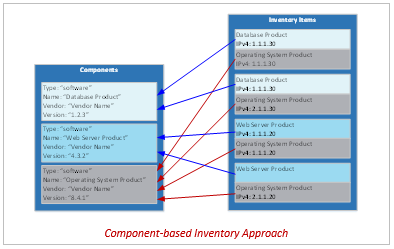
Component-based Representation
<!-- cut -->
<system-implementation>
    <component uuid="uuid-value" type="software">
        <prop name="virtual" value="no"/>
        <prop name="software-name" value="software-name"/>
        <prop name="version" value="V 0.0.0"/>
        <prop name="asset-type" value="operating-system"/>
        <prop name="vendor-name" value="Vendor Name"/>
        <prop name="model" value="Model Number"/>
        <prop name="patch-level" value="Patch-Level"/>
        <prop name="scan-type" ns="http://fedramp.gov/ns/oscal" value="infrastructure"/>
        <prop name="allows-authenticated-scan"  value="no">
            <remarks><p>If no, explain why. If yes, omit remarks field.</p></remarks>
        </prop>
        <prop name="baseline-configuration-name" value="Baseline Config. Name" />
        <prop name="function" value="Required brief, text-based description.">
            <remarks><p>Optional, longer, formatted description.</p></remarks>
        </prop>
        <link rel="validation" href="#uuid-of-validation-component" />
        <status state="operational"/>
        <responsible-party role-id="asset-owner">
            <party-id>person-7</party-id>
        </responsible-party>
        <responsible-party role-id="asset-administrator">
            <party-id>it-dept</party-id>
        </responsible-party>
    </component>
    <!-- service, interconnection -->
    <system-inventory>
        <inventory-item uuid="uuid-value">
            <description><p>If needed, describe this instance.</p></description>
            <prop name="asset-id" value="unique-asset-id"/>
            <prop name="ipv4-address" value="0.0.0.0"/>
            <prop name="public" value="no"/>
            <prop name="fqdn" value="example.com"/>
            <prop name="uri" value="https://example/query?key=value#anchor"/>
            <prop name="mac-address" value=">00:00:00:00:00:00"/>
            <prop name="serial-number" value="Serial #"/>
            <prop name="vlan-id" value="VLAN Identifier"/>
            <prop name="network-id" value="Network Identifier"/>
            <prop name="is-scanned" value="yes" />
            <implemented-component component-uuid="component-uuid-value " />
            <remarks><p>COMMENTS: Additional information about this item.</p></remarks>
        </inventory-item>
        <!-- Repeat the inventory-item assembly for each use of the above component -->
    </system-inventory>
    <!-- system-implementation remarks -->
</system-implementation>
Notes:
- If component-sample is an image of a Linux virtual machine (VM), and 10 instances of that VM are in use, there would be one (1) component assembly and ten (10) inventory-item assemblies, all referencing the same component.
Inventory Data Locations and XPath Queries
The following queries are intended to show where to find each piece of information within the system inventory template.
{{< figure src="/img/ssp-figure-26.1.png" title="All Inventory." alt="Figure describing guidance, valid values, requirements, cardinality, data location and other notes on fields that apply to all inventory items." >}}
{{< figure src="/img/ssp-figure-26.2.png" title="OS Infrastructure Inventory." alt="Figure describing guidance, valid values, requirements, cardinality, data location and other notes on fields that apply to OS infrastructure inventory items." >}}
{{< figure src="/img/ssp-figure-26.3.png" title="Software and Database Inventory." alt="Figure describing guidance, valid values, requirements, cardinality, data location and other notes on fields that apply to software and database inventory items." >}}
{{< figure src="/img/ssp-figure-26.4.png" title="Any Inventory." alt="Figure describing guidance, valid values, requirements, cardinality, data location and other notes on fields that apply to any inventory item." >}}
XPath Queries
Number of Inventory Items:
    count(/*/system-implementation/system-inventory/inventory-item)
  Number of Hardware Components:
    count(/*/system-implementation/component[@type="hardware"])
  Number of Software Components:
    count(/*/system-implementation/component[@type="software"])
  In Latest Scan?:
    /*/system-implementation/system-inventory/inventory-item[1]/prop[@name="is-scanned"]/@value

  List Inventory Items Not Scanned:
    /*/system-implementation/system-inventory/inventory-item/prop[@name="is-scanned"][@value='no']/../prop[@name='ipv4-address']
  List of Reasons Inventory Items Were Not Scanned:
    /*/system-implementation/system-inventory/inventory-item/prop[@name="is-scanned"][@value='no']/remarks/node()
Unlike most XPath 2.0 queries in this document, the following queries cannot be easily converted to XPath 1.0. If working with XPath 1.0, it may be necessary to perform each search with two separate queries. These queries will list all the IPv4 addresses for each scan type (infrastructure, web, and database), whether using the flat-file inventory approach or the component-based approach.
XPath Queries
distinct-values( (let $key:=/*/system-implementation/component[prop [@name='scan-type'] [@ns='http://fedramp.gov/ns/oscal']='infrastructure']/@uuid return /*/system-implementation/system-inventory/inventory-item [implemented-component/@component-uuid=$key]/ prop[@name='ipv4-address']) | (/*/system-implementation/system-inventory/inventory-item/prop[@name='ipv4-address'][../prop[@name='scan-type'][@ns='http://fedramp.gov/ns/oscal'] [string(.)='infrastructure']]) )
IPv4 Address of All Inventory Items Identified for Web Scanning:
distinct-values( (let $key:=/*/system-implementation/component[prop[@name='scan-type'][@ns='http://fedramp.gov/ns/oscal']='web']/@uuid return /*/system-implementation/system-inventory/inventory-item [implemented-component/@component-uuid=$key]/prop[@name='ipv4-address']) | (/*/system-implementation/system-inventory/inventory-item/prop[@name='ipv4-address'][../prop[@name='scan-type'][@ns='http://fedramp.gov/ns/oscal'][string(.)='web']]))
IPv4 Address of All Inventory Items Identified for Database Scanning:
distinct-values( (let $key:=/*/system-implementation/component[prop [@name='scan-type'] [@ns='http://fedramp.gov/ns/oscal']='database']/@uuid return /*/system-implementation/system-inventory/inventory-item [implemented-component/@component-uuid=$key]/prop[@name='ipv4-address']) | (/*/system-implementation/system-inventory/inventory-item/prop[@name='ipv4-address'][../prop[@name='scan-type'][@ns='http://fedramp.gov/ns/oscal'][string(.)='database']]))
IPv4 Address of All Items Where an Authenticated Scan is Possible:
distinct-values( (/*/system-implementation/system-inventory/inventory-item/prop [@name='ipv4-address'][../prop[@name="allows-authenticated-scan"][@value='yes']] ) | (let $key:=/*/system-implementation/component[prop [@name='allows-authenticated-scan'][@value='yes']]/@uuid return /*/system-implementation/system-inventory/inventory-item [implemented-component/@component-uuid=$key]/prop[@name='ipv4-address']))
IPv4 Address of All Items Where an Authenticated Scan is Not Possible:
distinct-values( (/*/system-implementation/system-inventory/inventory-item/prop[@name='ipv4-address'][../prop[@name="allows-authenticated-scan"][@value='no']] ) | ( let $key:=/*/system-implementation/component[prop [@name='allows-authenticated-scan'][@value='no']]/@uuid return /*/system-implementation/system-inventory/inventory-item [implemented-component/@component-uuid=$key]/prop[@name='ipv4-address']) )
Authenticated Scan Justification (if Authenticate Scan is "no"):
/*/system-implementation/system-inventory/inventory-item/prop[@name="allows-authenticated-scan"][@value="no"]/remarks/node()
OR
/*/system-implementation/component/prop[@name="allows-authenticated-scan"] [@value="no"]/remarks/node()